
Your brain is always capable of change. But it's not equally ready for change at all times. Neuroscience research suggests there are specific windows — periods where your brain is neurochemically primed to form new connections and encode new patterns more efficiently.*
Understanding these windows doesn't require a neuroscience degree. It requires knowing a few key principles and structuring your habit-building efforts around them.
What Neuroplasticity Actually Means
Neuroplasticity is your brain's ability to reorganize itself by forming new neural connections. Every time you learn something or practice a behavior, you're strengthening specific neural pathways. Repeat that behavior enough times under the right conditions, and those pathways become the default — the automatic route your brain takes without conscious effort.*
This is the neurological basis of habit formation. It's not metaphorical. It's structural. Your brain physically changes when habits form.*
The Role of Neurochemicals
Neuroplasticity isn't just about repetition — it's about what's happening neurochemically during repetition. Research from Andrew Huberman and others has highlighted several key neurochemicals that appear to facilitate or enhance plasticity:*
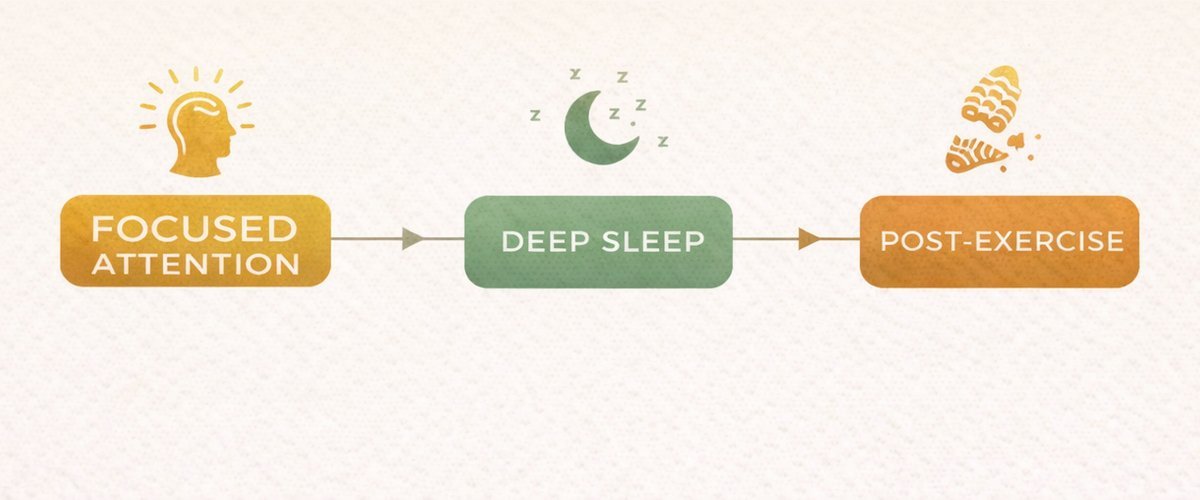
Acetylcholine — released during states of focused attention. It may act as a "spotlight" that marks which neural circuits should be modified. Without focused attention, the same behavior produces less neural adaptation.*
Norepinephrine — associated with alertness and urgency. Moderate levels may enhance the brain's readiness to encode new information. Too much (chronic stress) may impair it.*
Dopamine — not just about pleasure. Dopamine may signal "this was worth repeating" and could strengthen the neural pathways involved in the rewarded behavior.*
The combination of focused attention plus mild alertness plus genuine reward may create the optimal neurochemical environment for lasting behavior change.
Use your brain's natural windows for change. The free Calm Start Kit gives you 3 practices timed to your biology — or get The Calm Sleep Reset for the complete 7-day sleep-support routine.
When the Windows Open
Based on current research, several factors appear to influence when your brain is most receptive to change:*
Early morning (first 1-3 hours after waking). Cortisol and norepinephrine are naturally elevated, which may create a state of heightened alertness conducive to focused practice. This is often cited as an optimal window for activities requiring neuroplastic adaptation.*
After physical movement. Exercise increases BDNF (brain-derived neurotrophic factor), which research suggests may support the growth of new neural connections. Even a brief walk may enhance the brain's receptivity to change.*
During deep sleep. Much of the actual consolidation may happen while you sleep — specifically during deep (slow-wave) and REM sleep phases. This is when the neural pathways activated during the day appear to be consolidated and strengthened.*
How to Use This Practically
You don't need to become a neurochemistry expert. The practical application is straightforward:
Practice your new habit during high-alertness periods. For most people, this means morning. Not because of some productivity guru advice, but because your neurochemistry may be most favorable for encoding new patterns.*
Bring genuine focused attention. Half-hearted repetition may produce less neural adaptation than shorter periods of truly focused practice. Quality of attention may matter more than quantity of repetition.*
Protect your sleep. If consolidation happens during deep sleep, chronic sleep deprivation may be actively undermining your habit-building efforts — regardless of how disciplined you are during the day.*
Move your body before practicing new behaviors. Even 10-15 minutes of physical activity may enhance the neuroplastic window that follows.*
This is why Better Life Habits protocols are structured as morning routines with specific timing, attention, and movement components. It's not about rigid schedules — it's about aligning your practice with the windows where your biology is most ready to support change.*
Work With Your Brain's Natural Timing
The Calm Start Kit gives you 7 morning protocols designed to work with your brain's natural readiness for change — built on the same behavioral sleep science recommended by the American College of Physicians.
Sources & Further Reading
- Huberman, A. (2021). How to increase motivation and drive. Huberman Lab Podcast, Episode 12.
- Sale, A., Berardi, N., & Maffei, L. (2014). Environment and brain plasticity: Towards an endogenous pharmacotherapy. Physiological Reviews, 94(1), 189–234.
- Doyon, J. & Benali, H. (2005). Reorganization and plasticity in the adult brain during learning of motor skills. Current Opinion in Neurobiology, 15(2), 161–167.
- Walker, M. (2017). Why We Sleep: Unlocking the Power of Sleep and Dreams. Scribner.
*Educational content only. Not medical, psychological, or therapeutic advice. References to neuroscience research are for educational context. Consult healthcare professionals before making health changes. Individual results vary.